Main Stage
| 7 October |
| 19:00 |
| 2026 | Wednesday |
|
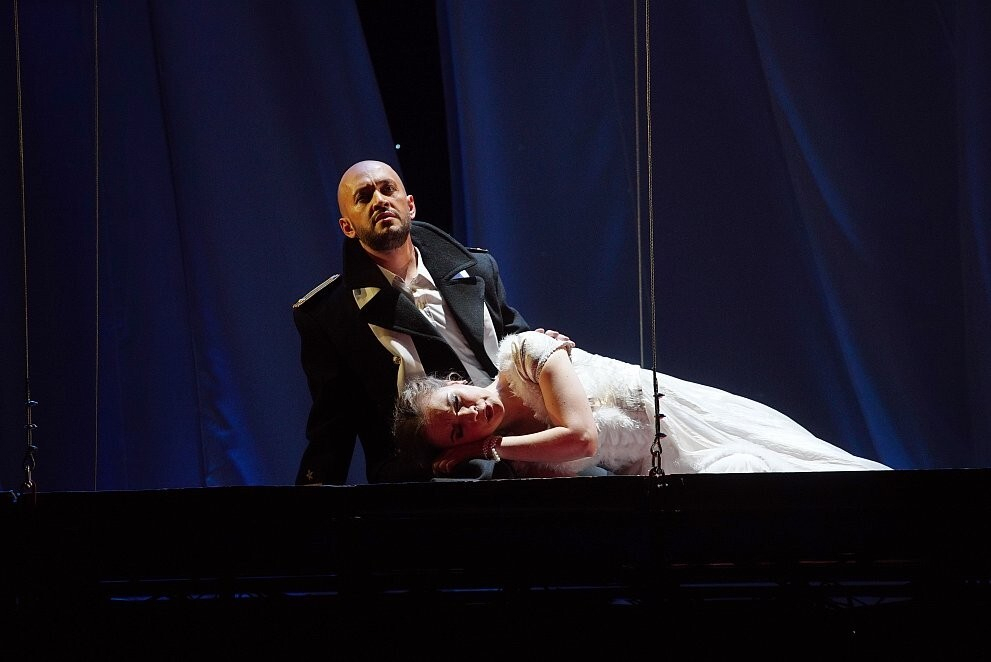
Giuseppe Verdi "Otello" Opera in four acts Opera |
|
Premiere of this production: 26 Mar 2026
Libretto by Arrigo Boito, after William Shakespeare´s tragedy Othello, or The Moor of Venice After the premiere of Aida, at the height of his fame, the composer “went silent” for many years. New generations of young musicians were appearing on the stage and the great operatic reformer Richard Wagner burst onto the scene. Verdi decided to break his creative silence by turning to the great tragedy of Shakespeare, whom he idolised and whose works repeatedly inspired him.
A musician, playwright and the leading Italian librettist of the time, Arrigo Boito, conductor Franco Faccio, and publisher Giulio Ricordi encouraged the composer to begin work on an opera based on the story of Othello. Verdi was not bound by a specific deadline and worked in a leisurely fashion, carefully selecting and translating the text of the tragedy into music. Striving not to lose any of its psychological depth, he actively participated in both the creation of the libretto and the direction, delving into every detail, right down to the director’s instructions to the singers.
On the 5th of February 1887, the premiere took place at La Scala in Milan. A colossal success awaited it: the opera was immediately hailed as one of the composer’s greatest works. Indeed, the score of Otello is striking in its impeccable form and the profound psychological motivation of the characters, which is palpable not only in the singers’ parts but also in the refined role of the orchestra, “revealing” its hidden intentions.
The opera was first staged at the Bolshoi Theatre in 1891. Conducted by Ippolit Altani, directed by Anton Bartsal and designed by Karl Valtz, all three were legendary figures whose names are etched in gold into the Bolshoi Theatre’s history. But although Otello achieved tremendous success at its very first performance and earned the composer the title of honorary citizen of Milan, its stage history in Russia turned out to be relatively modest.
Verdi’s innovative approach was evident: the opera did not feature the elaborate traditional operatic numbers and divertissements to which the public had become accustomed, and the fact that the music was subordinated to the task of creating convincing characterisations of the major characters: the courageous, passionately loving and suffering Otello, consumed by dark suspicions; the misanthropic Iago, the incarnate demon of evil, and the tender Desdemona, tormented by a premonition of her tragic fate — this was also new.
In the 20th century, Otello was staged at the Bolshoi only twice. But the production teams were once again comprised of the brightest stars of their day. In 1932, the production was led by conductor Alexander Melik-Pashayev, director Nikolai Smolich and designer Pyotr Sokolov; in 1978 it was conducted by Yevgeny Svetlanov, directed by Boris Pokrovsky and designed by Valery Leventhal. The final performance of this last production took place in 1985.
Otello is unthinkable without performers possessing virtuoso vocal technique and impressive acting skills. Despite its relatively short stage history, the Bolshoi has produced a galaxy of brilliant performers of all the opera’s characters.
The title role was performed by Nikolai Preobrazhensky, Mikhail Medvedev, Nikandr Khanayev, Nikolai Ozerov, Vladimir Atlantov and Zurab Sotkilava. The Bolshoi production also featured the renowned American tenor and Metropolitan Opera soloist James King. Desdemona was performed by Alma Fohström, Nadezhda Salina, Margarita Eichenwald, Glafira Zhukovskaya, Maria Baratova, Elena Mezheraup, Tamara Milashkina and Makvala Kasrashvili. Iago was sung by Bogomir Korsov, Pavel Borisov, Dmitry Golovin, Vladimir Politkovsky, Alexander Voroshilo, Vladimir Valaitis and Yuri Grigoriev.
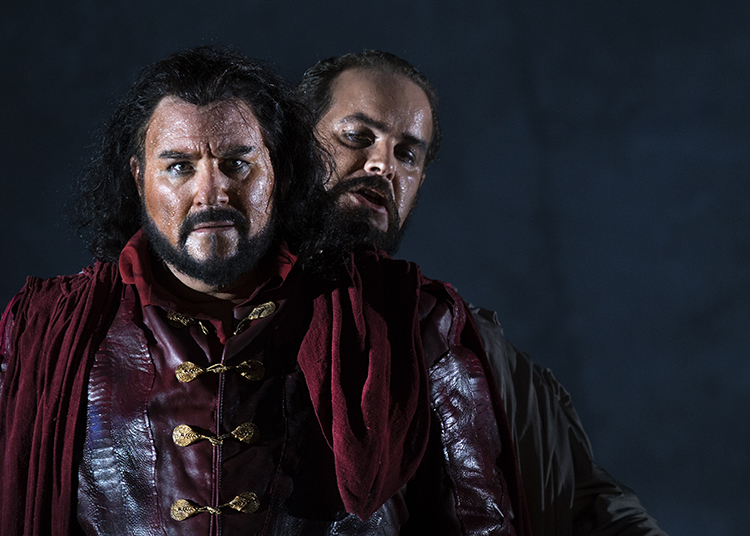
After a long, forty-year hiatus, Otello was returned to the Bolshoi Theatre’s repertoire by maestro Valery Gergiev and director Giancarlo Del Monaco, a brilliant connoisseur and subtle interpreter of the Italian operatic repertoire. This is their third collaboration in recent years: in 2024, they worked on the production of Rigoletto at the Bolshoi Theatre (it marked Mr. Del Monaco’s Bolshoi debut), and in 2025 they presented the premiere of Verdi’s Aida at the Mariinsky Theatre. However, their collaboration began three decades ago, with a production of Otello.
“When Valery Gergiev became the general director of the Mariinsky Theatre, I was one of the first directors he approached”, recalls Giancarlo Del Monaco. “I still remember that performance and all the artists, even though almost thirty years have passed. We worked together, communicated a lot and discussed theatre. I believe the notorious “collaboration” as a process is not always important. The main thing is to believe that what you are doing comes from a shared idea. And we agree on fundamental points — on how we see theatre.”
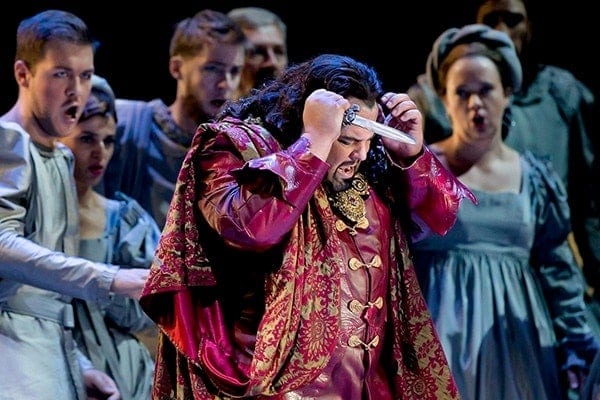
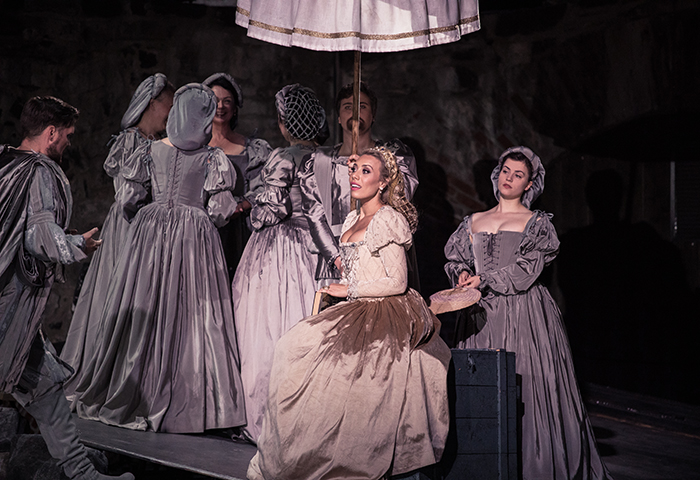
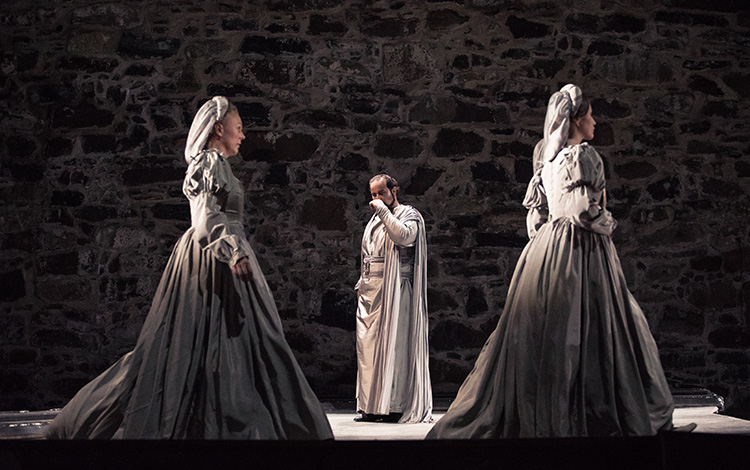
In the new production of Otello, the director deliberately rejects strictly defined historical or geographical conditions. According to Giancarlo Del Monaco: “The action of Otello is determined not by spatial and temporal coordinates but by human behaviour. Jealousy, anger, betrayal, impulsive violence and belated remorse are not historical phenomena. They are constants of human existence. Therefore, in our production, we approach Otello as a work that transcends any time, place or cultural tradition. It becomes a dark exploration of humanity itself.” SynopsisACT I
A harbour. Evening. The triumphant arrival of Otello, the new governor, is interrupted by a sudden storm. The tempest has already taken the lives of dozens of sailors and townspeople while the sea continues to throw corpses and wrecked ships onto the shore. The lighthouse ceases to function. The townspeople look for Otello among the bodies – few believe it possible to survive such stormy seas...
Suddenly Otello?s voice can be heard above the panicked crowd. The people greet him in delight that he has survived.
The storm fades and the lighthouse is lit anew. Attempts are made to clear away the debris. Those who are drenched and shaken are given warm clothing, food and drink.
Iago, Otello?s comrade-in-arms and retainer, is among those overseeing the clearing-up process, though he is deeply envious of his patron. Iago cannot forgive Otello for appointing the young Cassio and not him to a high rank. In revenge, Iago plots to incite the Venetian Roderigo against Cassio, Roderigo being in love with Otello?s wife Desdemona. Iago convinces Roderigo that the handsome young Cassio is his rival.
Provoked by Iago, Roderigo quarrels with Cassio. In vain Montano, the island?s former governor, tries to pacify them – beside himself, Cassio beats him mercilessly.
Hearing raised voices, Otello comes from his house, followed by Desdemona. Otello punishes Cassio for his crime, stripping him of his military rank, and tells Iago to restore order.
Night. The deserted shore. Alone at last, Otello and Desdemona tenderly recall the past, caught up in the delight of being together. Affairs of State, disasters and bloodshed all cease to exist when they are alone together.
ACT II
Morning. Otello?s new study, as yet unusable following his arrival. Iago and Cassio bring in their superior?s belongings. Widows of sailors lost in the storm are waiting in the ante-room.
Obsessed with his cunning plot, Iago assures Cassio that with Desdemona?s protection he can retrieve his lost honour and title: everyone knows that the new governor is hopelessly in love with his wife and will grant her every wish.
Desdemona herself appears: she is amused with Iago and his wife Emilia?s sons who are playing. As yet her marriage to Otello has not produced any children... Cassio approaches Desdemona and begins to speak. As if by chance, Iago draws Otello?s attention to them. Shamming anxiety he confidentially advises: "Temete, signor, la gelosia!"
Otello, though angry and disturbed, remains unshakable: Desdemona, whose beauty, grace and gentle nature are praised by the entire island, is incapable of treachery.
Desdemona turns to her husband, asking compassion for Cassio. Without realising it she thus aids Iago, fuelling Otello?s jealousy. Not knowing the cause of his wrath, Desdemona wishes to cool her husband?s forehead with her handkerchief. Otello wrenches the cloth from his wife?s hands in fury and throws it on the floor. Emilia picks it up to give to her mistress but Iago seizes the handkerchief from his wife. It will be of use to him later...
Desdemona and Emilia leave. Otello is anxious – he both believes and disbelieves the tortuous suspicions that are tearing at his soul. Farewell to everything – love and happiness, glory and life! In anger Otello throws himself on Iago and swears to destroy him if he has defamed Desdemona. In a pretence of despair, Iago is ready to submit proof – if he is forced to do so: once at night he heard Cassio say Desdemona?s name in his sleep and he has seen him with her handkerchief, a wedding present from Otello. Taking control of himself, Otello goes to the townspeople and relatives of those who died and makes an official speech to mark the day of mourning.
ACT III
Daytime. The hall in the governor?s house has been prepared to bid farewell to the sailors lost in the storm, and the event is to be attended by the various ambassadors in Venice.
Otello is obsessed with the thought of his wife?s infidelity. Seeing Desdemona in the hall, Otello asks her to tie the handkerchief he gave her on their wedding day on his head. Unable to find the handkerchief and paying little attention to her husband?s request, Desdemona again begins to speak of Cassio. Otello is furious: he demands the handkerchief he gave her on their wedding day! In vain Desdemona assures him of her fidelity. Mad with jealousy, Otello drives her out. Alone, he cannot reconcile himself with the idea that he could lose his love: everything he has done and believed in will collapse.
Iago continues to weave his web of deceit: now he intends to convince Otello of his complete devotion, advising him to hide and carefully observe all that happens. Then, having summoned Cassio, Iago enters into an ambiguous conversation, subtly juggling with the names of two women – Desdemona and Bianca, Cassio?s beloved. Iago asks Cassio to show him the handkerchief that he himself has placed in his room. The serene Cassio admires the beautiful handkerchief...
Convinced of his wife?s treachery, Otello decides that he will kill her himself. He orders Iago to obtain poison, but the latter advises him to strangle Desdemona in bed. Iago himself undertakes to deal with Cassio.
The ambassadors arrive at the grandiose funeral ceremony for the sailors. Lodovico, one of the ambassadors, informs Otello that he has a new position and Cassio will be his successor. On hearing this Otello is enraged: a man he hates appointed to such an exalted position! The presence of Desdemona and her kind words about Cassio intensify the blow. Rudely insulting Desdemona, Otello demands that the guests leave the hall and falls senseless.
The people on the square chant "Behold the Lion of Venice".
ACT IV
Night. Otello and Desdemona?s bedroom. In the morning they are to leave the island. Desdemona is seized with dire premonitions. She sings an old, melancholic song about a poor girl who is abandoned by her lover and is transformed into a willow tree. In vain Emilia tries to soothe her mistress – despondent with gloomy thoughts, Desdemona bids her farewell and prays.
Otello appears. Unable to find the strength to carry out his plan, he attempts to make her admit to her sins – in vain Desdemona swears her innocence, in vain she begs for mercy. For the last time Otello takes his wife in his strong arms...
Emilia runs in: Cassio has just killed Roderigo who attacked him, provoked by Iago. Otello admits murdering his wife. Hearing Emilia?s scream, people run in. Before everyone, she exposes Iago – it was he who took the handkerchief from her in order to defame Desdemona. Otello kills himself so he can share his wife`s fate...
|
Giuseppe Verdi "Otello" Opera in four acts
on the playbill |
Main Stage
Teatralnaya ploschad, 1 (Theatre Square, 1), Moscow, Russia
New Stage
Bol'shaya Dmitrovka Street, 4/2, Moscow, Russia
RAMT
Teatralnaya ploschad, 2 (Theatre Square, 2), Moscow, Russia
|